
2026 Ontario Budget offers small business tax cut as economic storm clouds loom
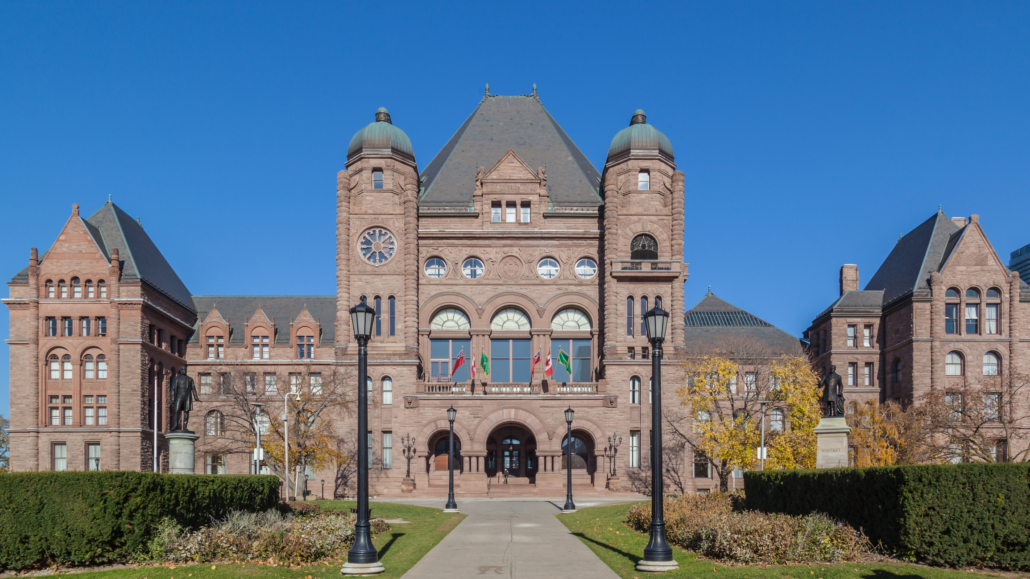
The Ford government is no stranger to economic uncertainty. The COVID-19 pandemic delivered a near-catastrophic economic shock, then inflation, before unexpected tariff threats from South of the Border last year generated damaging new headwinds. While trade issues with the U.S. are ongoing, the conflict in Iran presents yet another new complication that could impair economic growth and again spike inflation as oil prices rise. It’s in this context that the government tabled the record $244.2 billion 2026 Ontario Budget at Queen’s Park yesterday.
Finance Minister Peter Bethlenfalvy’s budget delivers a welcome tax cut for small businesses and a cautionary approach to spending. His fiscal outlook also underscores the precariousness of the province’s finances at a time when long-term financial forecasting has become more guesswork than not.
“Ontario continues to navigate a period of global economic and geopolitical uncertainty,” the minister stated in the budget. “The year ahead could bring the potential of new challenges. This is why our government is ready with a plan to protect Ontario — for today and for generations to come.” The word ‘protect’ features throughout the budget document and nods to the Ford government’s defensive economic stance. This is not a time for bold new initiatives. Nor, apparently, is it a time to balance the budget.
Indeed, the provincial deficit is projected at $12.3 billion for the 2025–26 fiscal year, climbing to $13.8 billion in 2026–27 ($6 billion more than projected in the 2025 Fall Economic Statement) and $6.1 billion in 2027–28 (rather than a projected $200 million surplus). Queen’s Park should be in the black by 2028–29 (with a $600 million surplus), if the province’s fiscal fortunes unfold as planned. Real GDP is expected to grow by a modest 1 per cent in 2026, then by 1.7 per cent in 2027, 1.8 per cent in 2028 and 2 per cent in 2029.
Slow economic growth will give the government little fiscal breathing room, especially if the Iran situation worsens and becomes protracted, inflation surges or the Americans decide to play hardball in upcoming Canada-US-Mexico Agreement renegotiations. All three of these are plausible (possibly simultaneous) scenarios.
Some of the key highlights of Budget 2026 include proposals* to:
- Reduce the small business corporate income tax rate from 3.2 per cent to 2.2 per cent effective July 1st, 2026. The budget estimates that more than 375,000 Ontario small businesses would benefit from the relief over the next three years
- Allow businesses to accelerate the income tax deduction on the cost of depreciable assets. The measure would align with similar changes announced by the federal government
- Temporarily remove the “… full 8 per cent provincial portion of the HST for eligible buyers of new homes valued up to $1 million, providing up to $80,000 savings to an eligible buyer. This maximum rebate amount of $80,000 would be maintained for new homes valued between $1 million and $1.5 million. For new homes valued above $1.5 million, a reduced rebate would be available. Higher-valued new homes that would have qualified for the maximum rebate of $24,000 under the current rules would qualify for at least that amount under this proposed enhancement. This would mean all eligible buyers, including first-time home buyers, could receive the same or more in total provincial relief as announced in the fall for first-time home buyers.” The enhanced HST rebate would be available from April 1st, 2026 to March 31st, 2027.
- Establish a new Protect Ontario Account Investment Fund that would allocate as much as $4 billion to attract investment from pension funds and other private investors
- Provide an additional $107 million over three years (beginning in 2026–27) for the Critical Technologies Initiatives program to accelerate the development, commercialization and adoption of technologies in sectors such as advanced manufacturing, automotive, life sciences, mining, defence, agriculture and smart infrastructure
- Provide $9.4 million over three years (beginning in 2026–27) to renew grants for the Summer Company and Starter Company Plus programs delivered through the Small Business Enterprise Centers (SBECs) network
- Provide an additional $300 million for the repair, upgrade or construction of new sport and recreation facilities across Ontario
- Commit $1.1 billion in additional hospital funding for 2026–27
- Provide $186 million in new funding for the Ontario Autism Program
- Increase funding by $325 million for the Primary Care Action Plan—to a total of $3.4 billion over four years—to improve access to family doctors or primary care providers
- Allocate $66 million per school year to help teachers cover the cost of classroom supplies
- Dedicate an additional $6.4 billion over four years to fund post-secondary institutions
- Invest $30 billion over 10 years for new schools and childcare projects
- Provide an additional $1.1 billion over three years for patient home and community care services
- Deliver $139.4 million in additional annual funding for long-term care for seniors
- Extend (for two years) the Ontario One Fare Program for GTA transit users
- Allocate $32.5 million in 2026–27 for enhanced provincial border security
*Note: Several of the proposed measures in Budget 2026 were announced in the preceding weeks
Ontarians find themselves in a familiar post-budget day position. While the province’s fiscal situation is far from dire, it is still trending in the wrong direction. The budget’s forecasts are questionable at best. One significant economic surprise, and all bets could be off. As boxer Mike Tyson once said: Everyone has a plan until they get punched in the mouth. The Ontario government has a fiscal plan. But prolonged pain at the pumps that fuels inflation, the sudden introduction of hefty new tariffs on U.S. imports from Canada, or the outright cancellation of CUSMA—a nightmare trade scenario—could be the headshot that sends Ontario’s economy reeling.
At this point the Ford government can only guard against uncertainty. The province’s debt will continue to surge, and deficits could linger up to the next provincial election. At least. In the meantime, the premier and his finance minister tinker at the fiscal margins, waiting for either brighter economic days or the next storm to arrive—if it ever does.
Armando Iannuzzi, Co-Managing Partner
For more information on measures announced in Ontario’s 2026 Budget, contact a member of the KRP LLP team today.